How to Compare Fractions with Unlike Denominators
Learn to find a common denominator so you can compare fractions that have different-sized pieces. Follow the worked examples, then try it yourself.
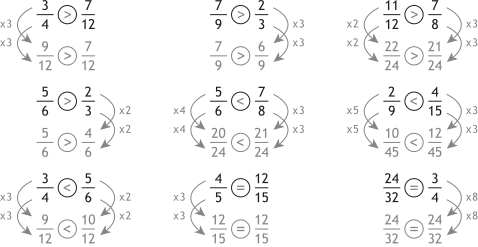
See It
Study the worked examples below. Each step is shown so you can follow exactly how the problem is solved.
Do It
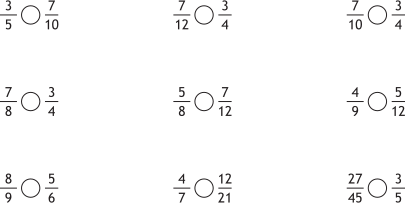
Now it's your turn. Grab a pencil and paper and try these problems using the method you just studied.
Check It
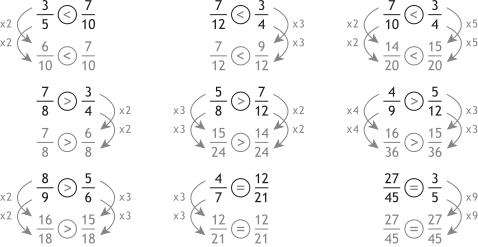
Done? Reveal the answer key to check your work.
How Do You Compare Fractions with Different Denominators?
When two fractions have different denominators — like 3/4 and 5/6 — you can't compare them directly because the pieces are different sizes. The solution is to rewrite both fractions with the same denominator, then simply compare the numerators.
Find the least common multiple of the two denominators, convert each fraction, and the one with the larger numerator is the larger fraction. For example, 3/4 = 9/12 and 5/6 = 10/12, so 5/6 is larger because 10 > 9.
Comparing fractions is a foundational skill that shows up in ordering numbers, solving inequalities, and everyday decisions — like figuring out which sale gives you a bigger discount. Building confidence here makes all future fraction work easier.
This Is One Activity From Book 2: Fractions
The full book has 40 activities just like this one — each with worked examples, matching practice problems, and a complete answer key. No tutor needed. No app. Just a pencil and a workbook.
Get Fractions — $40