What Is Partial Products Multiplication?
Partial products breaks multiplication into place-value pieces and adds them up. This lesson shows the method alongside the traditional algorithm so you can see how they connect.
See It
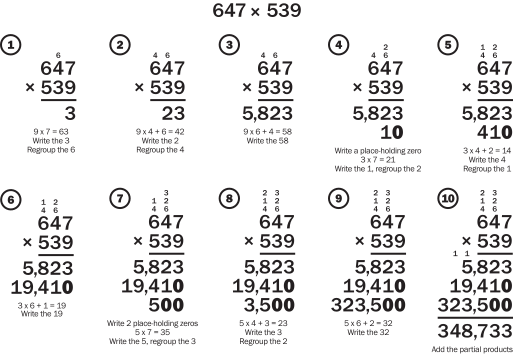
Study the worked examples below. Each step is shown so you can follow exactly how the problem is solved.
Do It
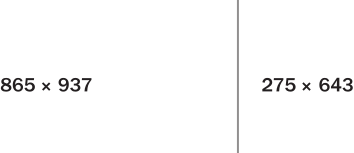
Now it's your turn. Grab a pencil and paper and try these problems using the method you just studied.
Check It
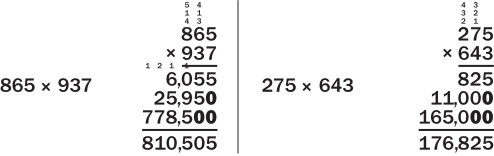
Done? Reveal the answer key to check your work.
How Does Partial Products Multiplication Work?
Partial products multiplication splits each factor by place value and multiplies every combination separately. To multiply 36 × 24, you compute four partial products: 30 × 20, 30 × 4, 6 × 20, and 6 × 4. Then you add them all up: 600 + 120 + 120 + 24 = 864.
The partial products method makes visible what the standard algorithm does behind the scenes. When you carry a 1 in traditional long multiplication, you're really adding a partial product — the partial products method just writes each piece out separately so you can see it.
This lesson is especially useful because it shows both methods side by side. You'll see the same problem solved with partial products and with the standard algorithm, making it clear that they produce the same answer through the same underlying math.
This Is One Activity From Book 1: Basic Math Operations
The full book has 50 activities just like this one — each with worked examples, matching practice problems, and a complete answer key. No tutor needed. No app. Just a pencil and a workbook.
Get Basic Math Operations — $40