What Is Area Model Multiplication?
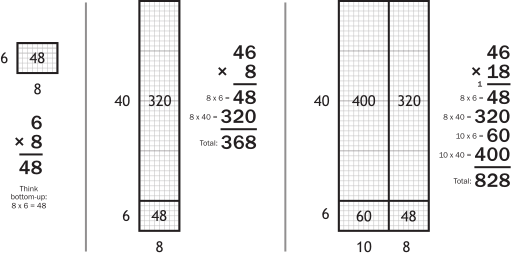
The area model breaks a multiplication problem into smaller pieces using a rectangle. It's a visual way to see why multiplication works — and it connects directly to the standard algorithm.
See It
Study the worked examples below. Each step is shown so you can follow exactly how the problem is solved.
Do It
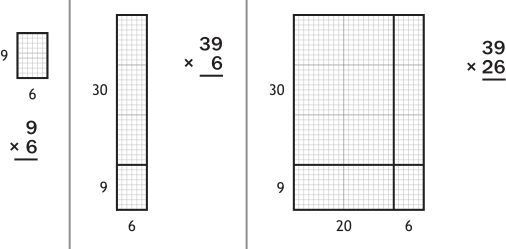
Now it's your turn. Grab a pencil and paper and try these problems using the method you just studied.
Check It
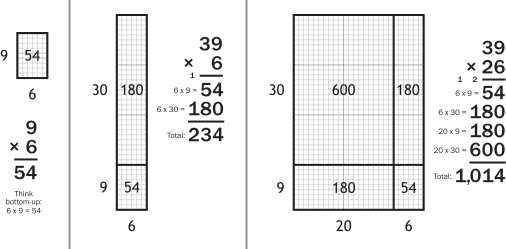
Done? Reveal the answer key to check your work.
How Does Area Model Multiplication Work?
Area model multiplication uses a rectangle to break a multiplication problem into smaller, easier parts. To multiply 23 × 14, you split each number by place value (20 + 3 and 10 + 4), draw a rectangle with four sections, and multiply each pair. Then you add the four products together to get your answer.
This method is popular in schools because it makes the math visible — you can literally see where each part of the answer comes from. It's not a different kind of math than the traditional method; it's the same multiplication, just organized visually instead of vertically.
If your child brought home homework with boxes and arrows and you're not sure what's going on, this lesson will make it clear. The worked examples show exactly how to set up and solve area model problems, and the practice section lets you try it yourself.
This Is One Activity From Book 1: Basic Math Operations
The full book has 50 activities just like this one — each with worked examples, matching practice problems, and a complete answer key. No tutor needed. No app. Just a pencil and a workbook.
Get Basic Math Operations — $40