How to Do Long Multiplication Step by Step
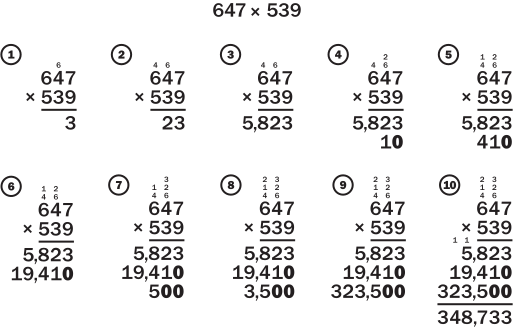
Multi-digit multiplication follows a clear process: multiply each digit, carry when needed, then add the partial products. Follow the worked examples to see exactly how it's done.
See It
Study the worked examples below. Each step is shown so you can follow exactly how the problem is solved.
Do It
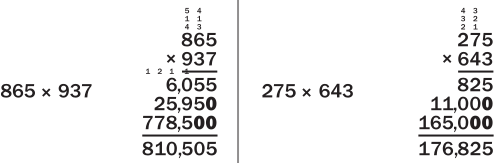
Now it's your turn. Grab a pencil and paper and try these problems using the method you just studied.

Check It
Done? Reveal the answer key to check your work.
What Is Long Multiplication?
Long multiplication is the standard method for multiplying numbers with two or more digits. You multiply each digit of one number by each digit of the other, keeping track of place value, then add the results together.
For example, to solve 34 × 27, you first multiply 34 × 7, then 34 × 20, and add the two partial products. The carrying (regrouping) step is where most mistakes happen — and it's exactly what the worked examples in this lesson focus on.
Once you see the pattern, long multiplication becomes a reliable process you can use for any size numbers. This activity breaks it down step by step so you can follow along, then gives you problems to practice on your own.
This Is One Activity From Book 1: Basic Math Operations
The full book has 50 activities just like this one — each with worked examples, matching practice problems, and a complete answer key. No tutor needed. No app. Just a pencil and a workbook.
Get Basic Math Operations — $40